Feldenkrais® Exercises and
Techniques
Feldenkrais Exercises Are Learning
Experiments
They are not your typical fitness exercises, such as weight training, Pilates, or yoga. They are learning experiments. Because the focus is on learning, Feldenkrais exercises are often referred to as lessons.
These lessons value awareness, curiosity, and comfort over strain, effort, and repetition. Your body is not a machine to be pushed to its limits; it’s an intelligent system capable of learning and adapting. As Moshé Feldenkrais, the founder of the method, put it:
“The aim is to move with minimum effort and maximum efficiency, not through muscular strength, but through increased consciousness of how movement works.”
So, how do we increase our consciousness of how movement works? By bringing curiosity, awareness, and presence to your movements. As you move with heightened awareness, you can identify which of your movements are strained, inefficient, or irritating. Then, you can locate those strains and pinpoint when the strain begins. Once you’ve identified these points, you can explore more efficient movement alternatives.
Feldenkrais Techniques And Exercises
Feldenkrais techniques and exercises differ from traditional exercises in mindset, focus, and goals:

Mindset: Mindful Curiosity
They emphasize mindful curiosity over repetitive strain or maximal effort. Feldenkrais lessons stand in stark contrast to the “no pain, no gain” mindset prevalent with traditional exercise.
Focus: Integrated Movement
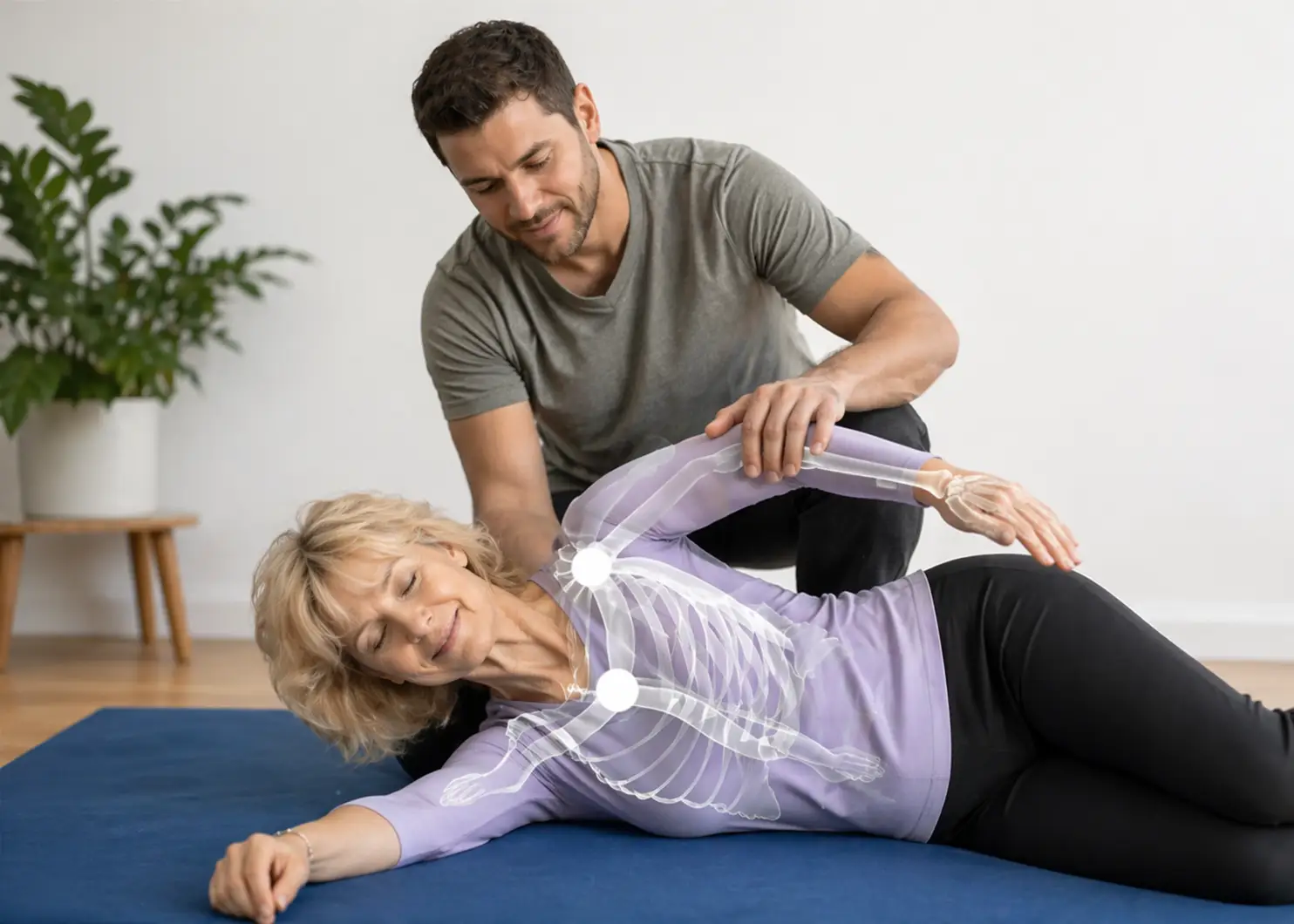
Feldenkrais integrates whole-body movement rather than focusing on specific muscles.
Goals: Coordination and
Fluidity
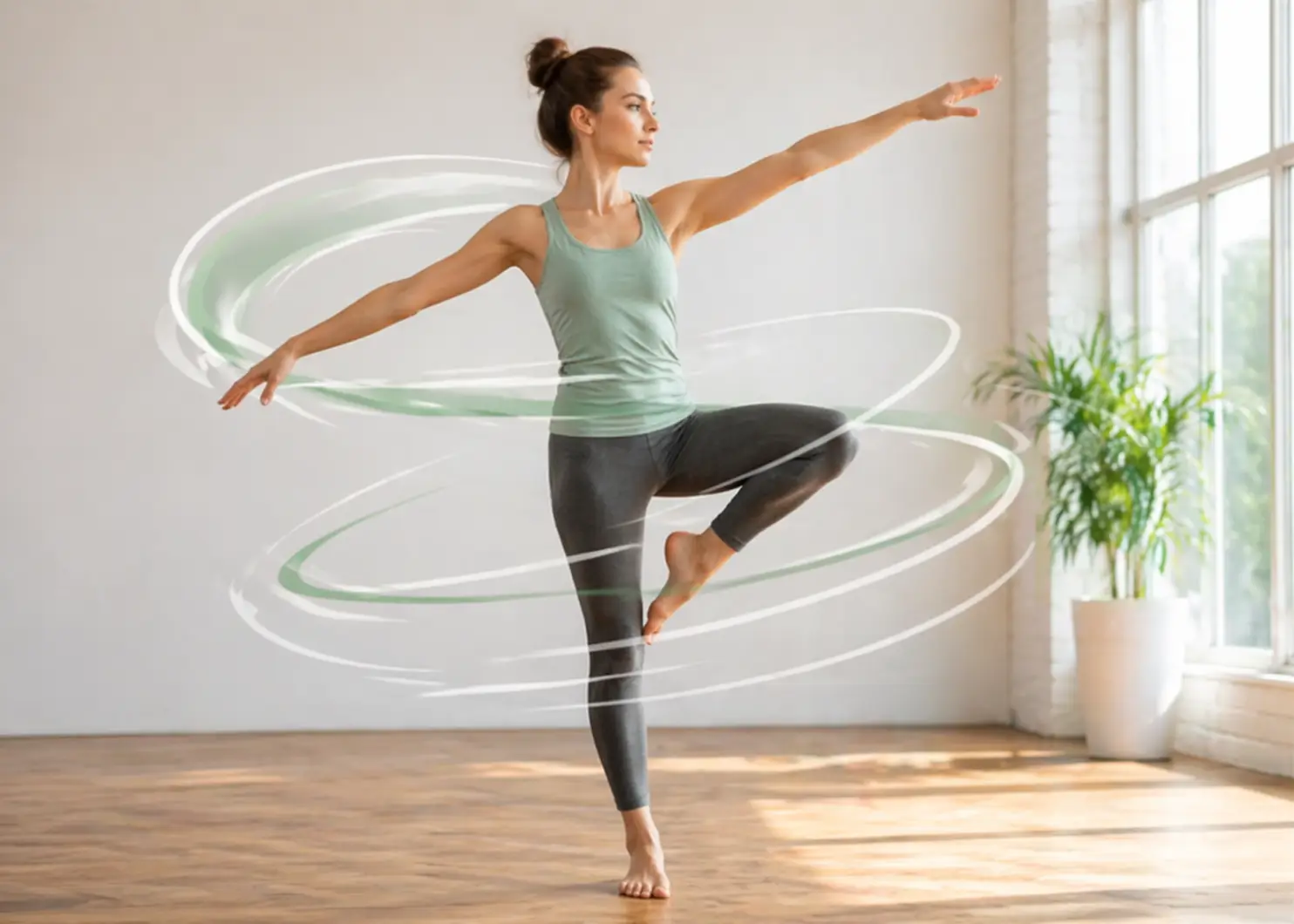
Rather than building brute strength, the aim is smooth, efficient movement.
Book A Free Consultation
In your free 55-minute consultation with your Feldenkrais practitioner, you will explore your goals and challenges, and identify specific movement patterns that are causing you problems. You will discover how we can work together to improve your movement so that you put less stress, wear and tear on your body.
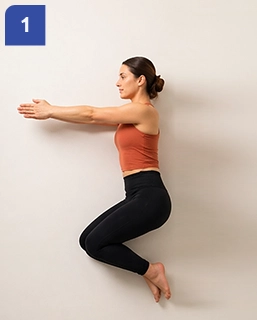
Start Position
(Establishing the Base)
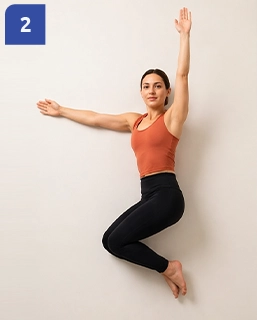
Arm to Ceiling
(Introducing the Movement)
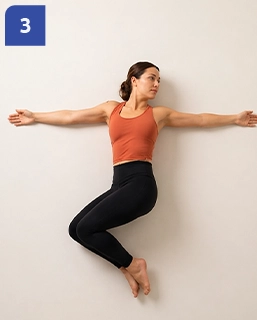
Arm Behind
(Inviting Trunk Rotation)
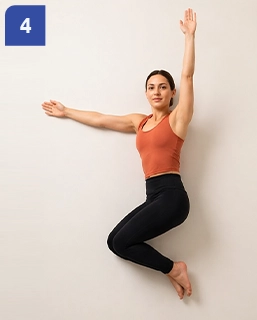
Return Slowly
(Conscious Reversal)
A Feldenkrais Exercise Example: Lifting Your Arm
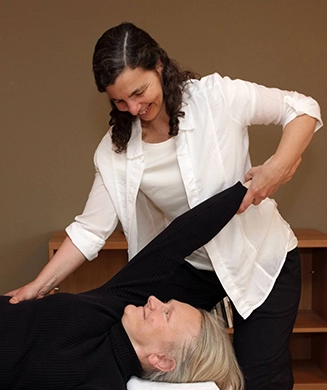
Imagine you are lying on your side with both your arms straight in front of you. Now lift your top arm toward the ceiling and then behind you. In a gym or yoga studio, this movement is done as a stretch that aims to twist your spine and open your chest as much as possible.
But let’s approach this differently—through the lens of Feldenkrais. As a Feldenkrais practitioner, I’m not interested in how far your arm moves or what end position you can reach. Instead, my goal is to use this movement to help you learn to lift your arm easily and lightly—with the same perceived effor
t you need to lift your pinky finger.
How can we improve the way you lift your arm? By exploring how you currently do it and considering what other options exist. For example, we might delve into what happens at the very beginning—when the top hand first lifts and loses contact with the lower hand. We might explore questions like:
- Did you glue your shoulder blade to your ribcage or did your shoulder blade counterbalance the weight of the arm?
- Did you hold your chest still or did you allow your sternum to turn toward the ceiling?
- Was your breathing regular or did you hold your breath?
- Did your lower leg engage with the floor or was it uninvolved in the movement?
Each question reveals new options. As you discover more options, you have more choice. And with more choice comes more freedom.
Getting Started With
Feldenkrais Movement Lessons
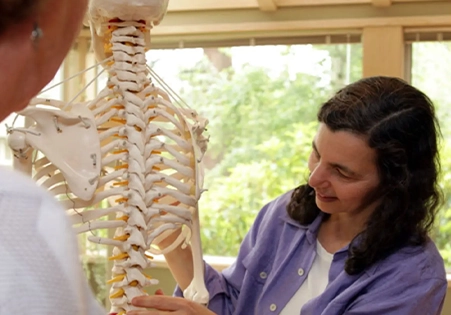
You can begin practicing at home using recorded sessions available online. However, working one-on-one with a certified practitioner is recommended when starting out. A practitioner can identify the specific movement patterns causing you trouble and then bring to your attention subtle, important details that occur when you do that movement.
The easiest way to begin is to schedule a free, introductory consultation. During the consultation, we will discuss your goals, and identify your challenges. You will discover how to improve your movement to put less stress, wear, and tear on your body. Schedule now
Feldenkrais Exercises Result in Profound Learning
While you develop your basic movement skills in childhood, Feldenkrais exercises in Seattle offer you the chance to continue improving your motor abilities and finding more graceful ways of moving. For example, Jeanie described her experience:
I learned to allow my skeleton (my bones) to support my weight and movement, instead of my exhausted, tense muscles — as it was designed to do. I was able to attain significant changes in my sitting and walking posture, affording me noticeable relief from back pain.
Kate explains how she learned to walk without pain:
– I learned how to employ the larger muscles in my torso so that the smaller muscles in my legs and ankles are not strained. When my hips, spine, sternum, and shoulders are all involved in walking, the pain goes away.

Feldenkrais balance exercises: shifting your weight onto the front leg
The body is more complex, but the principle is similar: the farther your weight moves from your base of support, the more muscular effort you need to stay upright. Strength matters, but it isn’t enough. I have worked with strong people who are unsteady on their feet. When they find a way to stand with their weight over their feet, standing becomes easier and feels more secure.
- Place your left foot a short step in front of your right, with most of your weight on the right leg.
- Slowly shift forward until most of your weight rests on the left leg. Pause and notice what changes.
- Return to the starting position and repeat several times.
As you shift forward, notice whether you collapse into the front hip and knee or lengthen upward through the front leg. Explore both gently. Which leaves you more ready for the next step?
Moshe Feldenkrais described good posture as the ability to move in any direction without preparation. If you sink onto the front leg, you may need to rise again before taking the next step. That extra adjustment can make walking feel less fluid or secure.
Now walk a few steps. As your weight arrives on each foot, notice whether you sink or remain ready for the next step.
Feldenkrais shoulder exercises: extending the arm lift
In each of the movements below, go slowly enough that it stays easy. If it starts to feel like effort, make it smaller. Return to lying on your side, both arms straight out in front of you, and lift the top arm toward the ceiling.
- Keeping your elbow straight and your hand pointing toward the ceiling, reach the whole arm upward a few inches, then let it return. Does your shoulder blade slides across your back?
- With your arm still pointing toward the ceiling, slowly turn your hand and forearm as if screwing in a lightbulb. Then allow the upper arm and shoulder to join the rotation.
- Let your torso join, turning so your chest rolls toward the floor. How far is the movement going through your ribs and back?
- Now turn the other way, so your chest opens toward the ceiling. Notice what your head and back do this time.
Now repeat the original arm lift exercise, i.e., bring your arm to the ceiling and behind you. Does it feel easier, smoother, or simply different? Notice whether allowing more of your body to participate changes how your arm moves.